
Why Winning Medicare Agencies Start AEP in July, Not October
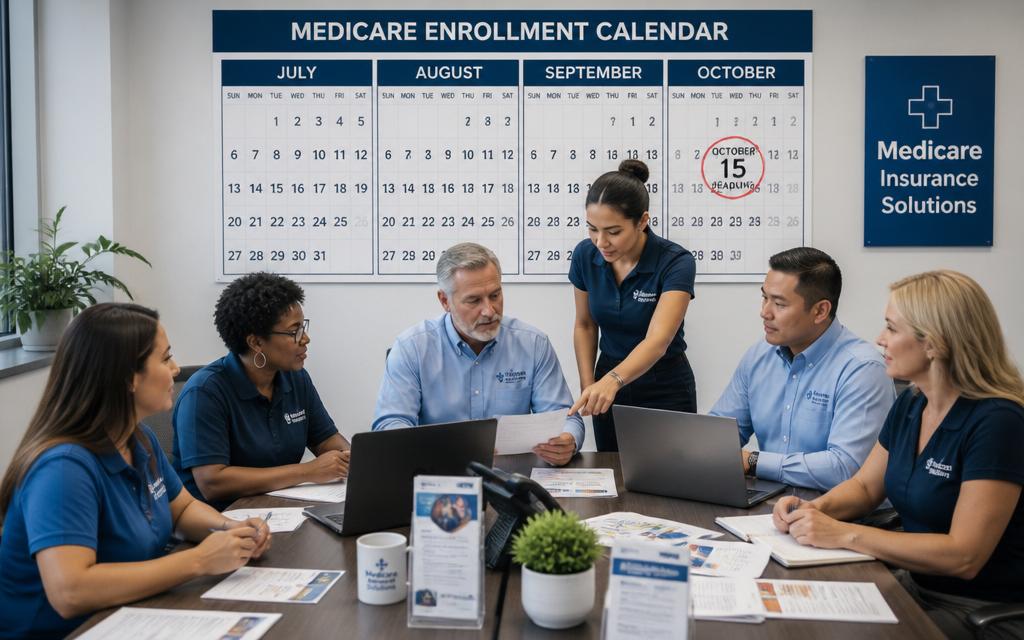
Ask ten people when Medicare's Annual Enrollment Period starts and almost all of them will say October 15. They're right about the calendar and wrong about the business.
October 15 is when you're allowed to sell. It is not when you start winning. By the time the enrollment window opens, the agencies that dominate AEP have already spent three months building the machine: certifying agents, locking in carrier contracts, hiring and training floor staff, wiring up compliance, and turning on lead flow. The operators who "start" in October spend the first two weeks doing what their competitors finished in August, and they never fully catch up.
If you run a call center, an agency, a brokerage, or a lead-gen operation, your AEP doesn't start on October 15. It starts right now in July and August.
The Two Medicare AEP Calendars
Every Medicare operator is really working against two calendars at once, and confusing them is the most expensive mistake in the business.
The official calendar is CMS's. The Annual Enrollment Period runs October 15 to December 7 — the window in which beneficiaries can enroll in, switch, or drop a Medicare Advantage or Part D plan for coverage effective January 1.
The operational calendar is yours. It's the schedule of everything that has to be finished before you can legally and profitably work that window: certifications, contracts, headcount, scripts, compliance, tracking, and lead supply. That calendar opens in late June and hits full stride in July and August.
| Official AEP calendar | Operational AEP calendar | |
|---|---|---|
| Owner | CMS | You |
| Starts | October 15 | Late June / July |
| Ends | December 7 | Ongoing through AEP |
| Governs | When beneficiaries can enroll | When you're actually ready to enroll them |
| Miss it and… | You can't sell | You sell late, understaffed, and behind |
The agencies that treat these as the same calendar are the ones scrambling in September. The ones that win AEP live by the second calendar.
What Actually Happens in July & August
Here's the work that quietly separates the winners from everyone else — all of it happening before a single beneficiary can legally enroll.
1. Certification and Ready-to-Sell status
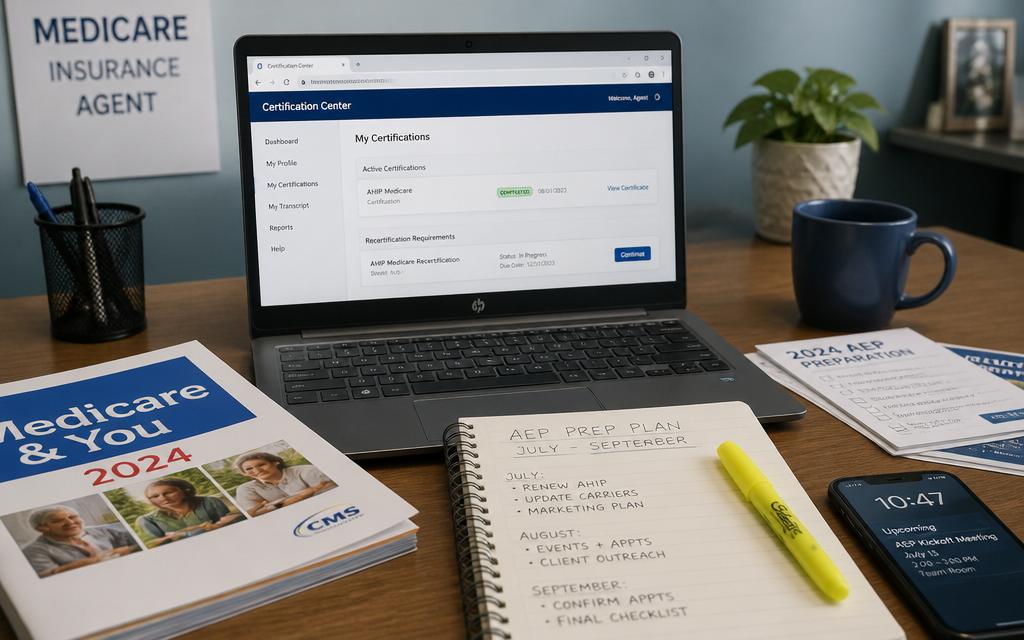
Certification season is the real starting gun. For the 2027 plan year, AHIP and NABIP Medicare training went live on June 22, 2026 — and no agent, and no agency downline, can be "ready to sell" without completing annual Medicare and Fraud, Waste & Abuse (FWA) training first. Carrier certifications only open after that.
The agencies that certify their producers in June and July aren't just compliant sooner. They've cleared the exact weeks in September that everyone else loses to a certification scramble. Wait until fall and you're fighting for carrier-portal bandwidth, retaking failed exams, and discovering that a producer isn't appointed with the one carrier your leads convert best on.
2. Contracting and carrier appointments
Ready-to-sell isn't one box — it's three: annual training, carrier product certification, and an active appointment with each carrier. Contracting and appointment timelines run weeks per carrier, and every producer has to clear them individually. If you're an agency or FMO managing a downline, multiply that across every agent on your roster. Summer is when this gets done without drama. October is when a missed appointment quietly caps your revenue.
3. Hiring and training your floor
For call centers, this is the one that hurts most. You cannot hire, onboard, script-train, and ramp a floor of agents in two weeks.
Summer is when you post roles, run interviews, push new hires through onboarding, and drill scripts, objection handling, compliance, and your CRM and dialer workflows so that on October 15 your team is closing, not learning. A rep still fumbling the Scope of Appointment on day one of AEP is burning your most expensive leads of the year. The floor you'll run in October is built in July and August, or it isn't built at all.
4. Compliance and TPMO setup
Summer is when you get the compliance architecture right while you still have time to be careful: the TPMO disclaimer in your scripts, call recording and retention, consent and Do-Not-Call scrubbing, Scope of Appointment processes, licensing and appointment verification, and disclosure language.
Fixing this mid-campaign, under peak volume, is how agencies end up with complaints, chargebacks, and regulatory exposure. The cheapest time to be compliant is before the phones are ringing off the hook.
5. Lead generation and campaign ramp
This is where the summer head start compounds for Medicare leads — and it's the most time-sensitive piece of all. Paid media does not perform cold:
- Google and Meta campaigns need weeks to exit the learning phase. Turn them on in October and you're paying learning-phase prices during the most expensive CPM window of the year.
- Landing pages and call flows need real testing cycles before you trust them with peak-season budget.
- Pay-per-call inventory has finite AEP capacity, and the best publishers and buffers get committed early. The premium inventory is spoken for by operators who lined it up in summer; everyone else fights over what's left.
Launch your lead engine in October and you're behind on cost, behind on volume, and behind on quality, all at once. Warm it up in July and August and it's producing at full efficiency the day the window opens.
The Real Cost of Waiting Until October
The enrollment window is only 54 days — and it's front-loaded. The heaviest enrollment volume clusters in the first couple of weeks after October 15 and again around the December 7 deadline.
So an agency that spends the first ten days of AEP still certifying agents, fixing tracking, or waiting on appointments hasn't lost ten days out of 54. It's lost ten of the highest-intent days of the year — the ones competitors are converting at full capacity. You cannot buy those days back in November.
Waiting until October means, in practice:
- Wasted lead spend — leads go cold on an understaffed, half-trained floor while campaigns burn learning-phase budget.
- Higher acquisition costs — you're bidding into peak-season CPCs and CPMs instead of building efficiency beforehand.
- Missed carrier options — appointments that aren't finished cap which plans you can actually write.
- Compliance risk — rushed setup under volume is where the violations happen.
- Team burnout — three months of prep compressed into three weeks, right as the busiest season of the year begins.
Your July–September AEP Readiness Timeline
Here's the operational calendar the winning agencies run.
July: Foundation
- Complete AHIP / NABIP for every producer; kick off carrier certifications and contracting.
- Finalize your headcount plan and open hiring for agents and closers.
- Lock in lead-gen partners and pay-per-call sources; reserve AEP capacity before it's gone.
- Audit last year's data: what converted, which carriers, which sources, which scripts.
August: Build
- Finish carrier certifications and appointments across the entire downline.
- Onboard new hires and begin training; finalize scripts and compliance workflows.
- Stand up and soft-launch campaigns: early creative testing, landing pages, tracking and attribution.
- Vet and integrate lead sources; test call routing, buffers, caps, and hours.
September: Rehearse
- Full-team script drills, mock calls, and final compliance sign-off.
- Scale campaign testing so you're out of the learning phase before October 15.
- Confirm every agent is ready-to-sell with every priority carrier.
- Pressure-test dialers, CRM, tracking, and reporting under load.
October 15: Execute
- Everyone's certified, appointed, trained, and compliant. Campaigns are warm.
- You open at full speed while competitors are still setting up.
What This Means for Your Operation
The bottleneck is different depending on where you sit — but the deadline is the same for everyone.
- Call centers: Your bottleneck is people. Hire and train in summer, or you'll open AEP understaffed and under-skilled at the exact moment volume peaks.
- Agencies and FMOs: Your bottleneck is the downline. Every producer who certifies late is a September fire drill. Drive early certification across the whole org.
- Brokers: Your bottleneck is readiness plus supply. Get ready-to-sell early and lock your lead sources before capacity disappears.
- Lead buyers and generators: Your bottleneck is inventory and campaign warm-up. The best pay-per-call and paid-media inventory is committed in summer, and campaigns need weeks to perform. Move in July.
The Bottom Line
Medicare AEP isn't won in the enrollment window. It's won in the weeks before it — when the disciplined operators quietly get ready while everyone else waits for the calendar to tell them to start.
October 15 simply rewards the work you did in July and August. If your certifications, staffing, compliance, and campaigns aren't already in motion, the clock is the one thing you can't get back.
Frequently Asked Questions
When does Medicare AEP start?
The official Medicare Annual Enrollment Period runs October 15 to December 7 each year. Operationally, though, agencies and call centers begin AEP preparation in late June and July when annual certifications open and staffing, compliance, and lead-generation ramp-up have to begin.
When should a Medicare agency start preparing for AEP?
The practical starting point is late June through July, as soon as AHIP and NABIP certification opens (June 22 for the 2027 plan year). Agencies that certify agents, finalize carrier contracts, hire and train staff, and launch lead campaigns in July and August are the ones ready to sell at full capacity on October 15.
What is AHIP certification and when does it open?
AHIP is the annual Medicare and Fraud, Waste & Abuse training that most carriers require before an agent can sell Medicare Advantage or Part D plans. For the 2027 plan year it opened June 22, 2026. Completing it early clears the way for carrier certifications, contracting, and marketing.
Why do Medicare lead campaigns need to start before October?
Paid media on Google and Meta needs weeks to exit the learning phase, and premium pay-per-call inventory is committed early — which is why agencies reserve inbound Medicare calls and live transfers well before the season opens. Campaigns launched in October run at peak-season costs and rarely reach full efficiency before the highest-volume enrollment days have already passed.
What happens if you wait until October to prepare for AEP?
You lose the highest-intent enrollment days to setup work — certifying agents, fixing tracking, waiting on appointments — while competitors convert at full capacity. Late preparation means wasted ad spend, understaffed floors, higher acquisition costs, and avoidable compliance risk.
Ready to scale your insurance lead generation?
Freedom Marketing Group generates high-intent, consumer-initiated inbound calls, live transfers, and web leads across Final Expense, Medicare, ACA, and other insurance verticals — compliance-first and priced on performance.
See how our Medicare live transfers and inbound Medicare calls are delivered, screened and routed to your agents.
Related reading
- Medicare AEP 2026 Is Here: What Agents Need to Know About 2027 ChangesMedicare Insights · 9 min read
- What Are Good Medicare Leads? 9 Quality Signals Agents Should Look For in 2027Medicare Insights · 12 min read
- Medicare AEP 2026 for 2027 Coverage: What Agents Need to KnowMedicare Insights · 8 min read